Blog

Paso Robles

Walking into a wine store and asking for a bottle of wine from Paso Robles is kinda like walking into Nordstrom and asking for a pair of shoes.  You need to give just a little bit more detail as to what you’re looking for, because chances are – they’ve got it.

Nordstrom shoes
Nordstrom shoe department: Not 612K acres, but still HUGE!!

At just over 612,000 acres, the Paso Robles AVA is California’s largest appellation geographically.  Over 40 different grape varieties are grown within the AVA.  However, Cabernet Sauvignon from the west side is going produce a very different wine than Cabernet Sauvignon from the east.  And these will both differ from a wine produced from somewhere in the middle.

These variations are practically unavoidable in an AVA of this size.  Smaller, better defined appellations produce wines of more consistency due to similarities in the area’s soil (Red Mountain), climate (Ancient Lakes), etc.  But Paso Robles has its Salon shoes mixed up with its BP shoes – so it’s challenging to know what you’re going to get just by choosing a wine with “Paso Robles AVA” on the label.

There are three primary reasons for the range of different wines produced in the Paso Robles AVA:

  • Climate: the western boundary of Paso Robles is only six miles from the Pacific Ocean which results in a cooling effect on these vineyards, as well as wetter weather (over 30 inches of rain annually!) Compare this to the eastern side of the AVA where the climate is much more arid and dry with rainfall at only about 10 inches per year.
  • Elevation: the west side of the AVA reaches up to 2,400 feet in elevation whereas the east side tops out at around 700 feet. Vineyards at higher altitudes have cooler temperatures than those on flatter areas so they are better able to preserve acidity in the grapes.
  • Soils: there are over 30 different soil series throughout the Paso Robles AVA.  Limestone and calcareous soils are more prevalent in the western portion, while sandier and more fertile soil is found to the east.
  • ⇒  Time for some dorking out on dirt: Calcareous soils are well draining and often contain lime –  which produces higher pH levels. The high pH reduces the vine’s vigor, allowing for flavor concentration and retention of acidity in wine.  Additionally, some of the most well-known wine regions in the world possess calcareous soils (Champagne, Burgundy, Southern Rhône).

Overall, Paso Robles AVA is a very warm growing region with daytime summer temperatures often reaching over 100°F!  If this heat isn’t managed in the vineyard, it can result in fat, overripe grapes and boring, flabby wine.  Climate, elevation and soil type all play important roles in preserving acidity in the grapes – particularly those on the west side of the AVA.  But this doesn’t mean that those grapes on the eastside are screwed!  Thanks to the region’s overall diurnal shift – where nighttime temperatures can drop by 40-50°F – even grapes on the warmer, drier eastern side of Paso Robles are able to maintain acidity and produce refreshing, delicious wines.

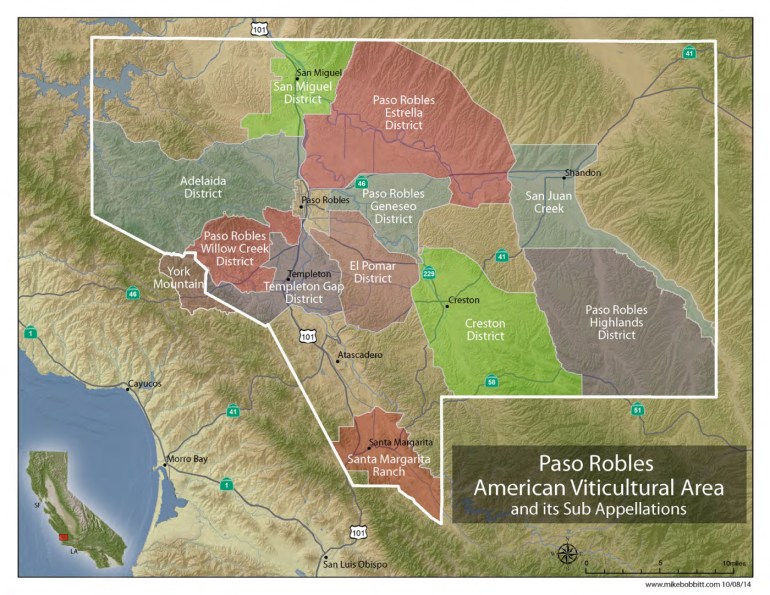
Paso Robles map

In an effort to assist consumers make a more informed choice as to wines from Paso Robles AVA, the area was recently divided into 11 sub-AVAs.  (And if you know my obsession with sub-AVAs, you know this has me positively giddy!)  The goal is to allow these smaller areas to develop their own identities and give consumers additional knowledge as to what’s in that bottle of wine they’re eyeing to purchase.  Time will tell if 11 sub-AVAs was overkill . . .

So back to my Nordstrom analogy – give the salesperson a better idea of what you’re looking for.  A timeless classic like Tory Burch ballerina shoes?  Try a Cabernet Sauvignon from Eberle Winery (founder Gary Eberle is known as the “Godfather of Paso”).  If you’re more of an ass-kicking Dr. Martens boot person – a big bold Zinfandel or Petite Sirah from Turley might fit you better.  Or if you like to be a little different and sport a pair of futuristic sneakers, then Rhône Ranger Tablas Creek is probably up your alley.

And if you’re looking for Christian Louboutins- try anything from Saxum.

Until I have time to delve into the 11 sub-AVAs – here’s the outline on Paso Robles.

Becoming a Certified Sherry Wine Specialist

“Isn’t that the shit you use for cooking?”

-Hubs on Sherry (did I mention he’s a beer guy?)

As if there weren’t already enough post-nominals in the wine world (WSET, CMS, FWS, etc.), last week I learned about one more: Certified Sherry Wine Specialist – CSWS.

The CSWS course is a 2.5 hour seminar sponsored by The House of Lustau – one of the most revered Sherry producers in the world.  The course has recently been making industry rounds in California from the Napa Valley Wine Academy to Neptune Wine School (where I’ll be taking my upcoming WSET Diploma classes!).

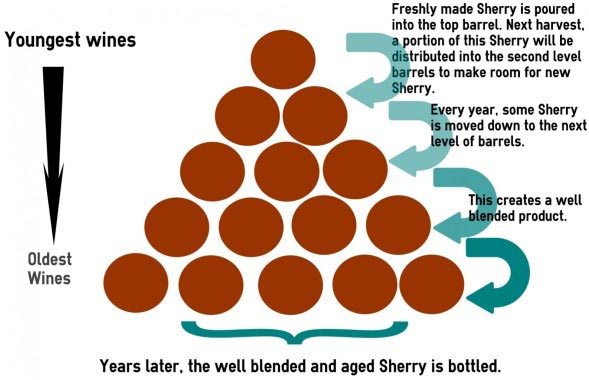
There’s quite a lot of information covered in this brief 150 minutes including the history of Sherry, its grapes and growing environment, and the famous (and fascinating) solera system shown below.

sherry-solera-system

In addition to a broad overview, class participants taste 6 different styles of Sherry – 2 Finos, a Manzanilla, an Amontillado, an Oloroso and a Pedro Ximénez.  This alone was worth the price of admission in my mind (a very reasonable $40).  It’s one thing to read about how Manzanilla Sherry has a briny/salty edge to it or that Pedro Ximénez is SO lusciously sweet, often tasting of dried fruit and coffee.  For me, the knowledge really sinks in when I can smell and taste these things for myself.  I’m no longer just memorizing facts, I’m having my own experiences – which are a helluva lot easier to recall if I need to for an exam!  Speaking of which…..the 2 hour seminar concludes with a 28 question exam (most of it multiple choice) and those achieving a score of 20 or higher will receive a CSWS certification.

Sherries

Although it’s advertised as an intermediate level course – I wouldn’t let this scare off any wine newbies out there.  Compared to some of the other wine classes I’ve attended, I found the CSWS to be completely welcoming (read: nonthreatening).  Nobody is put on the spot unless you want to be. 🙂  Our seminar was led by Lucas Payà who, along with being incredibly knowledgeable and patient with questions, also had a gorgeous accent that I could listen to all day.

I’d highly recommend this seminar to anyone interested in learning more about Sherry – no matter what your current wine knowledge level.  And for those other wine bloggers out there – the CSWS course is going to be offered at The Wine Bloggers Conference in October (and is a total steal at $15!)

Here’s my outline on Sherry which will provide you with a great overview, but just isn’t the same as tasting an amazing Pedro Ximénez!!


Rosé Roundup – Round 1

Many people associate Rosé wine with warm weather and plentiful sunshine.  Which means, for the most part, summertime.  I used to be one of these “many people.”  However, now that I’m living in SoCal – where temps have already reached close to triple digits and it’s only April! – I’m thinking that Rosé will be a go-to wine for me year-round now.  This definitely goes in the “pro” column for our move!

The 2017s are just starting to hit the store shelves and I’ve already scooped up several. Over the next several months, I’m going to do a series of “Rosé Roundups” in an effort to find my favorites. 🙂  And I’m going to do my best to branch out of my comfort zone of France and Washington State Rosés.

Here’s my first set of Rosés this season:

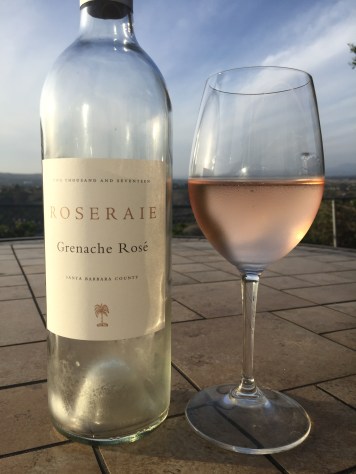
Margerum Wine Company 2017 ‘Roseraie’ Grenache Rosé, Santa Barbara County, CA.  (12.5% abv.)

Roseraie

This wine is all about sour cherries on the nose and palate – almost in a Sour Patch Kid candy kind of way.  There’s some under ripe raspberries in here too.  The back label says that a “touch of red Grenache from barrel” is added at bottling to add tannins and complexity.  I haven’t seen too many Rosés made this way – probably because it isn’t allowed in Europe (except for Rosé Champagne).  Here’s more information on various Rose Production Methods.

It is interesting to note that unlike prior vintages, the producer’s name (Margerum Wine Company) appears nowhere on the front label. And there’s no information about this particular Rosé on their website (however, there is info about another one they produce, Riviera Rosé, which sounds quite delicious!) Makes me wonder why Roseraie is absent. Are they not as “proud” of this one? Is it from less prestigious grapes? (I definitely believe so). Was it produced solely for Whole Foods (where I purchased it for $20)?

Whatever its mysterious existence might be, I’d put this wine in the “porch pounder” category.  It’s not very complex or interesting, but definitely goes down easily.

AIX 2017 Rosé, Coteaux d’Aix-en-Provence, FR.  (13% abv)

Aix

This Rosé was more herbal and mineral driven compared to the Roseraie above.  Lots of yummy smelling rose aromatics as well.  Tasted like I was munching on dried lavender and herbs, with a slightly spicy finish.  AIX is a blend of Grenache, Cinsault, Carignan and Syrah.

The region of Coteaux d’Aix-en-Provence produces almost 2 million cases of wine a year.  And this particular wine is widely available (I found mine at Whole Food for $18).  AIX had a bit more going on for it than the Roseraie, and would be killer with summer salads.


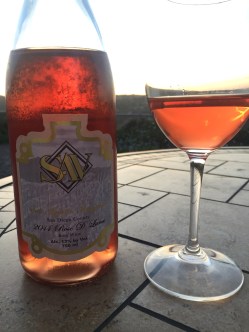
San Agustin Vineyards 2014 ‘Rosé D’Luna’, San Diego County, CA.  (13% abv)

San AgustinWhen I purchased this at a local wine store, I didn’t notice that it was from 2014.  It’s a bit odd to have a 3+ year old Rosé on the shelves that isn’t from one of the more age-worthy wine regions like Tavel or Bandol.  In general, most Rosés are not meant to age and should ideally be consumed within a year of their vintage date. Or, if you’re me, within a few hours of bringing the bottle home. 🙂  However, it appears that 2014 is actually this producer’s latest Rosé release.  Which is also a bit odd.  What the heck has it been doing for 3 years?

This Rosé is a blend of Cabernet Sauvignon and Malvasia Bianca.  If you’re unfamiliar with the latter, it’s primarily grown in the Mediterranean area and usually produces sweet wines that are higher in alcohol.  I’m not a huge fan of off dry Rosés, and unfortunately this one was no different.  Hubs said he wished he didn’t see it before he tasted it because he was immediately turned off by it’s almost neon orange color (which is ironic since he’s a huge 80s fan).

Rose MilkOverall, this smelled and tasted like my Grandma’s Rose Milk lotion (anyone else remember this stuff?)  And yes, I did eat some of this as a child after sneaking into her bathroom because I thought something that smelled like this would taste good.  Turns out, not so much. I tried this wine over the course of 3 days hoping that my opinion might change . . . it didn’t.

Savage Grace 2017 Cabernet Franc Rose, Red Willow Vineyard, Yakima Valley, WA.  (11.9% abv)

Ok, NOW we’re talking!  This was hands down my favorite Rosé of this first roundup .  Not a huge surprise since Savage Grace is one of my go-to Washington wineries.  I love his single varietal, single vineyard wines because you get a genuine expression of the grape and the land.  His 2017 Cabernet Franc Rosé was pink grapefruits, tart strawberries and raspberries and minerality.  I could drink this all day – with food or without. Savage Grace

I got my bottle from my good friend, Stacy.  But it’s available online here . . . and I might just have to order some more!

I’ve started a Rosé outline and will add to it as the season goes on.

What’s your favorite Rosé?  Let me know of any you think I should try! 🙂

Ribbon Ridge AVA (& My Weird Obsession with sub-AVAs)

We all have our own personal interests that may seem just a tad bit odd to the outside world.  Whether its Scandanavian house music from 1988, collecting vintage Scooby Doo posters, or memorizing every line of Bull Durham (Hubs!).  These interests are what make us unique and I admit to very much having one of my own:  sub-AVAs.  This shouldn’t come as a complete shocker as two of my very first blog posts/outlines were on the teeny tiny sub-AVAs of Ancient Lakes AVA and Stags Leap District, and my most recent outline details Oregon’s smallest AVA – Ribbon Ridge. I’m curious what exactly makes these sub-AVAs distinguishable from the larger (and more well-known) AVAs in which they’re contained: namely, Columbia Valley, Napa Valley and Willamette Valley.

AVA bottle
At least 95% of this delicious Pinot came from the Ribbon Ridge AVA

If you found your way to this blog, then you probably already know that “AVA” stands for American Viticultural Area.  These are geographic designations that establish boundaries of a specific grape growing region. Unlike a state or a county where boundaries are usually historically and/or politically based, an AVA’s boundaries are formed for the purpose of encompassing an area that shares a similar climate, soil type or geographical features.  In general, for a wine to be labeled with an AVA, at least 85% of the grapes must be from that area.  Oregon takes this a step further and requires that 95% of the grapes be from an AVA in order for the AVA’s name to appear on the label.

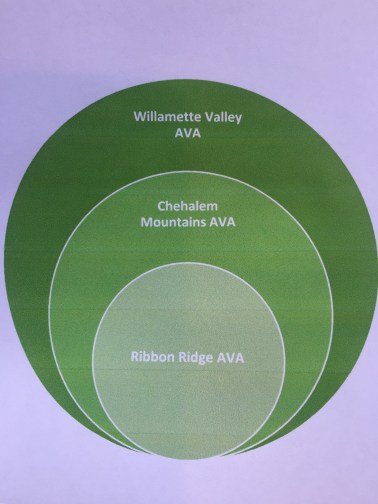
A sub-AVA (sometimes called a “nested AVA”, or as Hubs asked me “are these kinda like Russian nesting dolls?”) is a smaller AVA that is wholly contained within a larger one.  To form a sub-AVA, it must be shown that this smaller area is “sufficiently distinct” from its larger, encompassing AVA.

Sub AVA chart

Ribbon Ridge is a sub-AVA of both the Chehalem Mountains AVA and the Willamette Valley AVA.  It was granted its own AVA status because, among other reasons, it has a different soil type than these larger AVAs and it also possesses a different climate due to its higher elevation as an “island-like ridge” in the middle of the Willamette Valley.

Wineries in sub-AVAs like Ribbon Ridge have the option of “defaulting” to any larger AVAs that encompass them.  So if a Ribbon Ridge winery wished to label their wine Chehalem Mountains AVA or the more recognizable Willamette Valley AVA instead of Ribbon Ridge AVA, they could do so.

As of December 2017, there were 240 AVAs in the United States – 139 in California alone! An up-to-date list can be found here.

Rules confusing enough so far? We haven’t even started talking about the government’s involvement in all this . . .

To become recognized as an official AVA, a detailed application must be submitted for approval to the TTB (The Alcohol and Tobacco Tax and Trade Bureau).  If you’re curious about what all this entails – here’s more informationWarning: this is some seriously boring shit.  Back in my lawyering days, I dealt with the CFRs (Code of Federal Regulations) a lot.  You’d think these would be right up my alley since they’re set up in outline format (!!) but somehow, the government has managed to butcher even outlines on wine-related subjects.

TTB AVA
Actual footage of the AVA approval process

Moving on . . . once an AVA is established, grape growers within that AVA may cultivate whatever grape varieties they want, decide on farming methods, and produce wine with their choice minimum alcohol % and grape blend.  They also make their own decisions on how long to age their wines before release to the public and whether to age in oak or not.  This is very different from European appellation systems where all (or most of) these winemaking decisions are strictly regulated. Essentially, the AVA system regulates the “where” of wine and the European appellation regulates the “where” and the “how” (and sometimes the “when” too!)

Let’s compare Chablis AOC in France (Appellation d’Origine Controlee) with  Red Mountain AVA  in Washington:

France:  In order for a wine to be labeled “Chablis AOC” the grapes must come from the geographical region designated as Chablis. The wine must be made from 100% Chardonnay grapes and have a minimum 10% abv (alcohol by volume).  Additionally, yields are limited to under 60 hectoliters/hectare.

United States: In order for a wine to be labeled “Red Mountain AVA”, the grapes must come from the geographical region designated as Red Mountain AVA.  And . . . well, that’s it. No restrictions on varieties, yields or alcohol levels here. Winemakers have complete freedom on viticulture and winemaking decisions and can grow as diverse of varieties as they choose.

While freedom of choice and diversity of ideas are ideal foundations upon which to build a republic, perhaps not so much in wine production as it can lead to a hodgepodge of wines with no common characteristics. According to the TTB, the establishment of an AVA allows “vintners and consumers to attribute a given quality, reputation, or other characteristic of a wine made from grapes grown in an area to its geographic origin.”  In other words, the basic premise behind an AVA is that wines from this specific area will share certain, hopefully discernable, characteristics. However, with such freedom given to winemakers, this is often difficult (if not impossible) to accomplish.

I thought I’d try this out for myself by tasting two 2015 Ribbon Ridge AVA Pinot Noirs to see if I could identify any common characteristics:

Archery Summit 2015 ‘Looney Vineyard’ Pinot Noir, Ribbon Ridge. (14.5% abv)

  • Color: Medium- ruby, bright & clear
  • Aromas: Bright red fruits – cherries, raspberries & red plum.  Red licorice.  Spice and cedar.  Roses.
  • Palate: Medium bodied, medium+ acidity, medium tannins.  Ripe red fruits are present here too, along with some tea leaves.
  • My Thoughts: Very elegant, red fruit driven Pinot Noir.
  • Technical Bits: Looney Vineyard is Archery Summit’s only vineyard in Ribbon Ridge.  The winery’s website describes wines from Looney Vineyard having “an appealing precocious quality that can be seen in the distinctive sense of blue fruit they deliver to the palate. Fresh plums and red currant flavors combine with notes of citrus—particularly blood orange—and baking spices to deliver a juicy wine with great density and vigor.”


Gramercy Cellars 2015 ‘Le Pre du Col Vineyard’ Pinot Noir, Ribbon Ridge. (12.9% abv)

  • Color: Medium ruby, slightly hazier
  • Aromas: Funky earth & farmyard.  Dirty cherries.  Fall leaves.  There’s a definite stemminess here (no surprise, as a Gramercy mantra is “stems rule”!).
  • Palate: Medium bodied, medium+ acidity, medium tannins.  Lots of earthy/stemmy fruits along with cranberries and herbal tea.
  • My Thoughts: This is a funky-ass Pinot and I love it.
  • Technical Bits: This wine was fermented on 75% stems – which explains the more earthy/funky characteristics when compared to the Archery Summit.  Aged in large neutral barrels – might be why there’s a lack of oak/baking spices on the nose or palate.

Although these two Pinots had similar structural profiles, their aromas and flavors were quite distinguishable.  This probably is due to different winemaking decisions – whole cluster fermentation by Gramercy, partial new oak aging by Archery Summit.  So as far as “common characteristics” go, besides these both falling into my “yummy!” category, they’re very different wines.  Would I have guessed they’re from the same teeny-tiny sub-AVA of Willamette Valley?  Probably not.

So . . . what’s the point of having these small AVAs?  Do they have any real meaning in the marketplace? Even though I couldn’t discern many commonalities between the two Ribbon Ridge Pinots (admittedly a tiny sample size), I did enjoy them – and several others from this sub-AVA that I’ve had in the past.  So would I be likely to purchase another Pinot from this area?   Definitely.  So maybe that’s enough to justify sub-AVAs.

Tom Warks of Fermentation Wine Blog fame has a great post about how Napa Valley sub-AVAs are basically meaningless.  He sums it up beautifully:

Maybe I’m going out on a limb here, but I’d be willing to bet that some of the most experienced Napa Valley palates couldn’t successfully and consistently identify the AVAs from which a selection of different Napa Valley Cabernets originate. And if they can’t do this, what are the odds that Jimmy Bigcellar from Dallas can identify the AVA of different Napa Valley Cabernets?

Full disclosure to Mr. Warks:  I’m totally stealing “Jimmy Bigcellar” in future posts!

I’d love to hear some readers thoughts on sub-AVAs.  Do you pay much attention to them when purchasing wine?  Do you have a favorite?  If so, why?  And is anyone else out there a Ribbon Ridge Pinot fan?  Perhaps you prefer Scandanavian house music? 🙂

Here’s the outline on Ribbon Ridge.

12 Bottles & 1,000 Miles

In a few days I’ll be moving from my beloved Pacific Northwest to Southern California.  One of my biggest concerns of the move – besides how my 13 year old Lab will handle it – is how to get my wine down there safely.  I have about 15 or so cases, which in my mind isn’t a huge wine collection, although Hubs might disagree with me on this particular point.  (Sidenote: One somewhat uncomfortable part to the move thus far was having to disclose all of my wine hiding spots to Hubs – the two boxes behind my sweaters in the master closet, the one stashed under the extra dining room chairs, others that I won’t mention here so I can reuse these spots in our new digs.)

Thankfully, our moving company is going to handle transporting the majority of the bottles.  However, just in case (pun truly not intended), I’m setting aside a carefully curated case that will travel with us in the car.  We’ll take these 12 bottles of wine along with other precious and irreplaceable items (our Yellow Lab’s ashes, wedding photos, Hubs’s very first home run ball) and head south – funny that the things that mean the most to you in life have almost zero monetary value.

It was at this point in the move that I realized that I had some very difficult decisions to make:  What 12 wines would make the cut?  Which wines would I be the most distraught over losing?  The most expensive ones?  The oldest?  The wines purchased on our trip to France?  Those from my favorite wineries?  Those that elicit amazing memories?

After an extraordinary amount of consideration (and consternation) – I present to you in no particular order the dozen that made the I-can’t-live-without-them list and will be joining us on I-5 in a climate controlled environment…

Bottle #1:  L’Ecole No. 41 2012 Ferguson Vineyard Estate Red, Walla Walla Valley, Washington.  L’Ecole will always have a special place in my heart because it’s the first “real” wine that I ordered when we were out to dinner with friends who handed me the wine list.  This was at least a decade ago and it was a bottle of their Recess Red – back when they had the fun crayon drawing of a schoolhouse. L'ecole L’Ecole’s Ferguson wines have received some serious accolades the past few years (like best Bordeaux blend in the WORLD from Decanter Magazine).

Bottle #2:  Jean Foillard 2015 ‘Cote du Py’ Morgon, Beaujolais, France.  I had the 2012 vintage of this wine in my French Wine Scholar class back in 2014 and it totally turned me onto cru Beaujolais.  This Morgon tasted like a dirty Pinot – and I absolutely loved it.  Since then, I’ve been obsessed with the 10 crus and what differentiates them from one another.  Plus, I’ve ordered some 2016’s of this wine and want to geek out on vintage comparisons.

Bottle #3:  Betz Family Winery 2014 ‘Heart of the Hill’ Cabernet Sauvignon, Red Mountain, Washington.  This is me when I think of Bob Betz:  Betz heartsHe is truly one of the most genuine, likable and admired people in the Washington wine industry.  I’ve thoroughly enjoyed getting to know his wines over the past few years – as well as stalking him at various wine events.  And even though I’m not usually a Cabernet Sauvignon lover – particularly one from Red Mountain – this wine was my favorite at the Betz Spring Release last year.

Bottle #4:  Pago de los Capellanes 2016 ‘O Luar do Sil’ Godello, Valdeorras, Spain. It may seem odd to bring an under $20 bottle of fairly easily replaceable Spanish white as one of my “delectable dozen” but I have a good reason for doing so (besides this being an incredibly tasty wine and Godello a likely upcoming outline).  We’re stopping for two nights en route to SoCal, and I’m fully expecting the hotels’ minibars to only offer an overpriced, mass produced California blend.  So as to avoid that Conundrum (pun totally intended), I’ve included this wine as one that I won’t feel guilty opening.  Which brings me to . . .

Bottle #5:  Savage Grace 2016 Underwood Mountain Vineyards Riesling, Columbia Gorge, Washington.  As mentioned above, we’re stopping for two nights.  So one “ok to open now” bottle isn’t going to be enough.  Hubs loves Rieslings and I love Savage Grace – so this bottle will be a win-win.  Savage GraceBesides, I firmly believe that the primary reason the 2017 Auction of Washington Wines Picnic sold out was because their advertisement featured me and my galfriends with awesome winemaker, Michael Savage. 🙂

Bottle #6:  Zenato 2011 Amarone della Valpolicella Classico, Veneto, Italy. I’ve been studying for the Italian Wine Scholar certification for several weeks now and making slow progress.  (Note to self: next time you’re planning a move after 18 years in one house, don’t sign up for a challenging wine certification). This is probably the wine I’m most looking forward to tasting out of the several Italians that I purchased earlier this year.  And I’m saving it until I’m almost finished with my certification . . . which at this rate, will be around Thanksgiving.

Bottle #7:   Quilceda Creek 2012 Cabernet Sauvignon, Columbia Valley, Washington. This wine got 95+ points from all the major wine critics and is worth the most $$ of any bottle in my collection.  That’s a strange sentence to write as I’m not at all a points pusher nor do the most expensive wines typically grab my attention.  However, this is from an iconic Washington winery and my departure from the Pacific Northwest deserves at least one status bottle.  All that being said – I have no idea how I will personally feel about this wine as my palate tends to differ from some of the critics and, unlike shoes, I don’t always end up preferring the most expensive wine.

Bottle #8:  Guy Bernard 2013 ‘Cote Rozier’ Cote Rotie, Rhone Valley, France. Hubs and I purchased this bottle from the amazing Vincent on one of the most memorable days of my life. We hired him as our personal tour guide in the Northern Rhone and Guy Bernard was our last stop of the day.  Their facility/tasting room was a very unassuming place, charmingly cluttered and their wines were some of the best I’ve ever tasted.  And when Vincent took us in the back for some barrel thieving, I was hooked.

Bottle #9: Remi Niero 2014 ‘Chery’ Condrieu, Rhone Valley, France. This was another winery we visited with Vincent. He grew up in Condrieu and drove Hubs and me through its streets like a Formula 1 driver pushing his Peugeot to the limit. Vincent was also on a first name basis with the local winemakers including Remi Niero, who produces some damn delicious Viognier. If you’re ever lucky enough to find yourself in this beautiful wine region, I cannot recommend Vincent highly enough. He made our day so memorable and I’d go back just so he could take us out for another spin around his hometown. You can read more info about Vincent here.


Condrieu


Bottle #10:   Kevin White Winery 2013 ‘DuBrul Vineyard’ Red Wine, Yakima Valley, Washington. I have such fond memories of this wine!  I purchased a case at the Auction of Washington Wines barrel auction a couple years ago.   And, of course, after a few hours of tasting my competitive streak came out so I had to be the top bid and “win” the autographed barrel top.  Kevin WhiteKevin White remains one of my favorite Washington wineries for producing wines that taste like they should cost at least twice as much.

Bottle #11: Archery Summit 2013 ‘Looney Vineyard’ Pinot Noir, Ribbon Ridge, Oregon. I first visited this winery with my mom-in-law in 2010, thus beginning my love for Oregon Pinot Noir.  Besides being an absolutely gorgeous tasting room, Archery Summit produces unique, terroir driven wines from their six distinct vineyards.  Looney Vineyard is consistently my favorite, and I’ll be writing more about it in my upcoming Ribbon Ridge AVA post.

Bottle #12:  Gramercy Cellars 2015 ‘L’Idiot du Village’ Mourvèdre, Columbia Valley, Washington.  I could have filled my entire case with Gramercy wines.  So selecting just one was like picking a favorite dog – which Hubs might be able to do, but I cannot.  Greg Harrington is just the bees knees.  He’s an incredible winemaker and is always coming out with something different – Sangiovese, Pinot Noir, Picpoul(!). And while his Syrahs are among the best I’ve had, his Mourvèdre is one of my favorite wines.  Ever.  I credit him for turning me onto this varietal, and giving me a borderline obsession with it.  I also credit him with teaching me the proper method for opening a bottle of wine so as to pass the certified sommelier exam (minus the screwy face). 😉  Gramercy

Greg – if you happen to read this,  and plan on opening a tasting room in Southern California, please let me know and I’ll get you my resume ASAP to apply to be your tasting room manager.  And if you’re planning on opening a spot in Woodinville . . .  well, I just might hightail it back to the Pacific Northwest.

So there you have it, the delectable dozen that made the cut!   Although my next blog post will be from my newly adopted home in California – I will always remain a PNW wine girl at heart!!


Book Review: Viticulture by Stephen Skelton MW

I recently finished reading Viticulture: An introduction to commercial grape growing for wine production by Stephen Skelton MW.  Like many of my friends, I assume your first response may be “Why?!?!”  Well, the book is recommended reading for WSET Diploma students, so way back in October  – well before I could even register for the Diploma –  I ordered it.  Anyone who knows me is probably not surprised by this fact.  However. . . I’m embarrassed to say that it took me until the end of January to finish Viticulture.  At 123 pages, this means that I averaged just about one page per day.  A fact I’m not particularly proud of.

Viticulture is one of the densest, most information-packed texts I’ve ever read (yep, this includes my three years at law school) which might help explain why I went through it at such a snail’s pace.  Another excuse explanation is that a lot of this stuff was new to me and I wanted to absorb it slowly.  My only other academic exposure to this particular subject has been (i) my WSET Level 3 course last Spring; and (ii) my current enrollment in Northwest Wine Academy’s Viticulture class with Sparkman Cellars’ winemaker, Linn Scott (who is incredibly knowledgeable and has an awesome ability to make the subject matter more interesting with tons of personal stories and experiences.)

Yet another reason why this book took awhile for me to get through is because, well, . . it deals with science.  Much to the disappointment of my metallurgical engineer-working, astronomy-loving Dad, I’ve just never taken to science ever since I got a D+ in Life Sciences in 7th grade (thanks a lot, Mr. Santner!).  Even today, it’s just much easier for me to memorize the 10 Crus of Beaujolais, or the 13 permitted grapes in Châteauneuf-du-Pape, than for me to learn the different types of rootstocks or soil pH levels.

Even though Viticulture is a science textbook at heart, the author thankfully writes in a humane and comprehensible manner.  Overall, I found his writing style to be straightforward and educational, a fact that is greatly appreciated by those of us who are scientifically-impaired.  I also enjoyed the occasional personal anecdote or opinion – particularly on the topic of biodynamic viticulture.

Trellising
Trellising Systems

What’s this book about?  The book covers everything from the annual cycle of the vine, to site selection, to canopy management.  As with most viticulture texts, several pages are dedicated to phylloxera, its history and its “solution” via rootstock development and grafting.  Viticulture digs deep (pun totally intended) into the various soil layers and their characteristics.  And there are two entire chapters on diseases, viruses and vineyard pests.  The author goes into such detail about these various insects, larvae and bugs that I found myself getting the heebie jeebies.  (Sidenote: surprisingly, the heeby jeeby is, in fact, NOT a vineyard pest – but the ever popular Western Grapeleaf Skeletonizer is.)

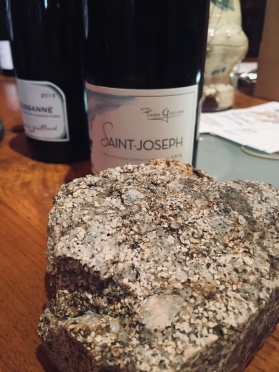
Saint Joseph granite
Granite from the Northern Rhône

Who’s this book for?  This is neither a light, nor particularly fun, read.  So I wouldn’t recommend it to anyone who’s just curious about viticulture and is looking for some general information.  Pick up The Oxford Companion to Wine or The Wine Bible instead.  Viticulture is way too intense and detailed for the lay person merely looking for a broad overview on the subject.

However, if you’re studying for a higher level wine certification, or working in the wine industry, or you’re my Dad, then this book is perfect for you.  Just give yourself plenty of time to digest the subject matter – this isn’t a Dan Brown page turner.

At this point, I have no idea whether this book covers more (let’s hope so!) or less than what I’ll need to know for my first WSET Diploma exam in June.  But I do know that having finished Viticulture I’ve gained a tremendous amount of knowledge on the subject that I simply didn’t have before, so for that Mr. Skelton, I thank you.  Viticulture will undoubtedly do wonders in helping me with my never-ending pursuit of wine education.  Now let’s just hope that I can do a little better than a D+ on the exam! 😉