Along with this video, I wanted to include a quote encouraging others to not be afraid to quit something that is no longer serving you. So I Googled “positive quotes on quitting” and found all those typical ones about how “quitters never win” or “you cannot fail unless you quit.” While these can be motivational, they can also make you want to throw up a bit in your mouth (or is that just me?)
These messages can guilt us into staying the course . . . the WRONG course. Our intuition might be gently nudging or even screaming at us that our time, energy and passion would be better spent elsewhere. But we fear the stigma of being “a Quitter” – so we don’t listen.
I didn’t listen until I was forced to. My cancer diagnosis gave me a much needed wake up call. And thankfully, I answered – and have changed the path I’m on.
Thank you Everyone for your support since I started this blog! I hope it continues to help wine students through various wine certifications . . . including quitting those that no longer align with your life goals. 🙂
Success does not lie in sticking to things. It lies in picking the right thing to stick to and quitting the rest.
– Annie Duke (Quit: The Power of Knowing When to Walk Away)
The results of one informed me that I could resit the MW exam next year because I hadn’t passed either the Theory or Practical section. The results of the other test told me to come in for a follow up as soon as possible because my mammogram showed abnormalities.
One set of test results told me I had Stage 2 breast cancer, and all of a sudden those other exam results that at one time were So Important – did not matter.
The MW program has been such a huge part of my life the past few years and I’ve shared much of my journey here. But now, I’m deferring for a year to focus on my health. I hope to pick up my studies and sit for the exam in June 2025, because that was not my best effort this last June. I KNOW I can do better.
But there’s another Stage 2 I need to improve on first . . . and I need to kick this one’s ass.
Some people may wonder why I’m sharing “I Have Breast Cancer!” publicly. I understand that many individuals choose to keep this intensely personal matter private. But I’ve decided that if my sharing this makes just one woman stop putting off her mammogram, it’s worth it.
I have surgery at the end of this month, which will be followed by treatment. To everyone who has supported me so amazingly with my wine studies – please send all the good thoughts you can spare for a successful surgery. I’ll keep you updated, and hopefully get back to posting about MW studies soon. 😉
As I mentioned in my last blog post – I am so thankful I took most of the summer off and focused on enjoying life outside of wine studies. The last sentence of that post now reads a bit differently to me: “having taken the time to rest, I am ready for whatever news comes at me later this week.” I wrote this the day before my mammogram results came back. While I can’t say I was “ready” for a cancer diagnosis (are we ever?), I am glad that my wine studies weren’t my top priority in the weeks leading up to that news.
When I rejoin the program, my studies will be A priority for me – but not THE priority. I encourage all my fellow wine students to pursue your studies with passion, and perspective.
Part of being a student is having assignments to complete – even when you’re in a relatively “unstructured” program like the Masters of Wine. For Stage 1 this homework is “optional”, but as I mentioned in a previous post – the MW course fees cover these assignments. Plus, students receive written feedback from MWs which, ideally, will help with preparation for the S1 Assessment. So, even though they aren’t mandatory, if you’re serious about the program – why wouldn’t you complete at least some of these?
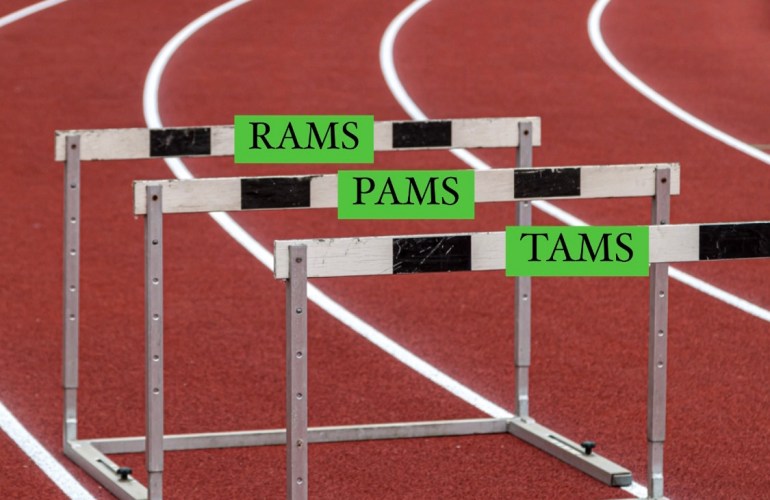
Stage 2 students are required to complete at least 3 TAMS, 1 PAMS and 1 RAMS assignment in order to sit for the MW exam at the end of the academic year. Since I’m aiming to sit in June 2023, that means I have a fair share of homework to finish in the upcoming months.
Having recently completed my first TAMS and PAMS for Stage 2, I thought I’d give a brief breakdown of these three assignment types and my experience (good & bad!) with each so far:
TAMS (Theory Assignment Marking Scheme)
What these are: actual theory questions from past MW exams. The TAMS questions are released after the beginning of the academic year and students can choose which one(s) they submit answers to on three deadlines. For Stage 1, questions come from Papers 1-4 only (since Paper 5 questions will not be on the S1A). For Stage 2, the TAMS questions come from all 5 papers.
How many I’ve done: 2 during Stage 1 and 1 so far in Stage 2. Topics have ranged from vineyard labor shortage to bulk shipping to why the fuck aren’t consumers buying more fortified wine (ok, that last one isn’t exactly verbatim . . . but that’s the heart of the question IMO).
Experience/Feedback received: Several weeks after submitting their TAMS, students receive feedback along with one of the following hypothetical grades: Very high pass / High pass / MW pass / Just below threshold / Below threshold. While it’s easy to focus on that hypothetical grade, based on my personal experience and what I’ve seen from other students, I wouldn’t read TOO much into this being a definitive indicator of your likelihood of passing Stage 1. Some students who received high passes didn’t do so well on the S1 exam. Others who didn’t do great on the TAMS assignment ended up kicking total ass on the exam. Bottom line is to pay attention to the feedback and focus on your weak spots.
My Gen X Gals will recognize this! Collecting stickers was probably a lot more fun than collecting MW examples . . .
Honestly, my TAMS feedback hasn’t been anything I don’t already know: sound structure, easy to read and succinct – but need more global examples. So, this is where I’m focusing a lot of my Stage 2 energy – collecting examples. Kinda like I did with stickers back in elementary school. It remains to be seen if trading will occur or if, like stickers, some individuals will refuse to let go of that sparkly, scratch n’ sniff unicorn. 😉
Per TAMS instructions, students are to aim to complete their essays “under exam conditions” and write answers within 60-75 minutes. Between you and me, I have not done this. In fact, every single student that I’ve spoken with has not completed their TAMS under true exam conditions (which IMO would include being unaware of the actual question asked until the clock starts ticking). Some students do hours of research and then try and write their essay under timed conditions. Others ignore the clock entirely and take their time both researching and writing. Perhaps some more experienced Stage 2 students are banging these essays out under true exam conditions, but I have yet to meet these individuals.
I haven’t completed my TAMS under exam conditions because right now I want to know if my “best efforts” would be passing answers on an MW exam. After researching and reviewing a topic, can I put together a coherent essay – including practical knowledge and examples – to achieve a Pass? I want to receive feedback on TAMS that I’ve taken my time with and feel at least somewhat confident about. And I fully acknowledge that I could not produce an essay of this caliber under true exam conditions . . . yet.
PAMS (Practical Assignment Marking Scheme)
What these are: essentially dry note exercises to help with preparation for the Practical (Tasting) part of the exam. A few weeks prior to the deadline, students are told what the wines are as well as the specific questions to address (i.e. identify the origin, discuss winemaking techniques, comment on style & commercial positioning, etc.)
How many I’ve done: 3 during Stage 1 and 1 so far in Stage 2.
Experience/Feedback received: While students receive feedback on their PAMS submissions, unlike TAMS, we don’t get an assigned grade. So, it’s usually unclear whether our answers would have been “passing” on an actual exam. After we receive our feedback, there is an online “recap session” with a couple of MWs who go over the questions and dissect a student’s answer (anonymously thankfully!) – and give suggestions as to what would make it a better answer. During one of these sessions last year, a student asked why we didn’t receive an assigned grade on our PAMS. One of the MWs hosting replied that it’s probably because many (read: most) submissions would not be passing answers on an MW exam. So, to avoid completely gutting us, they only give feedback. Yikes.
This is where the thick skin comes in (see this video with Amber where I mention this is a necessity for being an MW student!) Last year upon receiving each round of PAMS feedback, I felt discouraged. I am someone who tends to overly focus on negative comments. So at the time, that was all that jumped out at me. But having a clearer head now, when I go back and review my S1 feedback, the majority of comments were constructive and things I needed to learn! Using evidence from the glass to make my arguments. Being more succinct in my answers. Using style to help justify origin.
PAMS are tough until you get comfortable writing dry notes. It’s confusing because you know what the wines are, yet you’re being asked “What’s the variety and origin?” Dry notes also require moving away from the SAT that many of us learned in WSET and all that medium-minus and medium-plus terminology. Getting into the mindset of “how would I justify this was Syrah on an exam? What evidence would I use?” is challenging and it took several months of practice for this to click for me last year. It requires consistent practice – and learning from feedback.
RAMS (Research Paper Assignment Marking Scheme)
What these are: a brief (1200 word) research paper proposal. RAMS are for Stage 2 students only.
How many I’ve done: ZERO to date
Experience/Feedback received: well, none because I haven’t submitted any! But I’ll give you my thoughts anyways:
During Stage 1, I tuned out a lot of what was said about the research paper. Not because I was sticking my head in the sand about it, but because I was all about focusing on the next step in front of me (the S1 Assessment) – not the one that was several miles ahead of me. Students need to pass both sections of the MW exam before they write their research paper. But obviously this does not mean that’s when you first start thinking about it! For me, the timing needed to be a balance . . . and thinking about the research paper when I was stressing over the S1A was too early.
My plan is to complete my first RAMS after the S2 seminar in February. I’m still all over the place as far as potential research paper topics. I’d love to do something on my beloved Washington state. But am also very interested in wine education/certifications (how much do these help with future careers/advancement?) Or the role of social media/influencers in the wine industry (is it as impactful as we think?)
I’ll keep you posted! And I’d love to hear your thoughts on what you think would make an interesting research paper!
A few weeks ago, I received the news from the IMW that I passed my S1A and was progressing to Stage 2! But to be completely honest, I had to read the email twice because I was expecting the delivery to be more in MY language with a lot of emojis and exclamation points about what fantastic news this was!!! The Brits are (obviously) a bit more subdued than I am.
While we students don’t get a ton of information as to how well we did (or did not do) on the S1A, thankfully we do each receive some feedback on our exam performance. What I did fairly well: essay structure, tasting ability and logical arguments. What I need to work on: sweet wines (identification and production methods), vintages and global examples. This was helpful feedback and wasn’t overly surprising – I’m well aware of my weak spots and also know that I can write a decent, logical essay (thank you law school!)
One key bit of advice I have for new MW students is to acknowledge your strengths and weaknesses. We each have our own individual strengths, so embrace yours and use them to your advantage wherever you can. Case in point: my attention to detail seems to serve me well on exams since one of the Examiners’ most frequent comments about students is that they “don’t read the question!” And while you may not want to EMBRACE your weaknesses, at least be aware of what they are. Don’t bullshit yourself and pretend they don’t exist. Because they DO exist . . . and they’ll probably show up on your exam.
This “Season 2 news” also made me think about the future of this blog. What started out as a goal to document my “MW Marathon” – honestly and transparently – unfortunately fell by the wayside fairly quickly this year. And by the time I felt up to writing again, I needed to turn my focus towards preparing for the S1A instead of journalling my experience with the program.
But I do want to share my thoughts with future MW students and, selfishly, I’d love to have a log of my journey so when I’m a much older vintage I can look back, read these entries and think “what an adventure that was!” So – I’m going to continue, but with a couple of adjustments. First, I’m a perfectionist (shocker) and am trying to let some of those tendencies go. Especially when they aren’t necessary – like in a blog post. Future posts might not have all their t’s dotted and i’s crossed, but they will all be authentically ME. And second – I have somehow felt the need to write lengthy posts covering LOTS of details. But let’s be honest: I don’t have time to do that on a regular basis and you all probably don’t have the inclination to read long and rambling musings. MW students are encouraged to keep our exam essays under 1,000 words – and there’s no reason why my posts can’t be too. 😉
And if you’re more of a watcher than a reader, please check out Elevage Wine Coaching’s YouTube channel where we’ve posted some of my IG Lives on the MW program!
So . . . now what?! Well, my plan for the next couple of weeks is to actually help OTHER students over their hurdles (lots of Diploma students with exams coming up). But I’m easing myself back into MW studies, my study group has started up again and reconnecting with my fellow students & friends has re-energized me. 🙂 And knowing me, I’ll need to get a plan in place next month (November) so that I have some direction these next few months before the S2 seminar in February. Not exactly sure what that’ll look like – but I’ll share it with you when I figure it out!
I’m just getting started on my MW studies and have found that (so far!) the most complicated part of being an MW student is explaining to others how the program works! There aren’t required classes to attend or mandatory assignments to complete. No assigned textbooks, set schedule, or instructors. It is truly a self-study feat that will take around 3 to 7 (or more!) years and cost thousands. So, I completely understand why I get some weird looks and lots of questions from friends and relatives outside the wine world – and from a handful of those inside the wine world as well. 😉
Thankfully, the IMW provides several opportunities throughout the year for more structured learning. There is a weeklong seminar for first year MW students (we’re referred to as “S1” for “stage 1” – which reminds me of being labeled a “1L” in law school). S1 students can chose from one of three seminars throughout the world: Austria, Australia – and my beloved Washington state! What are the chances?! The seminar takes place in February, so I’ll go into details about that week in an upcoming post.
S1 students also have optional coursework assignments to submit for feedback (which I’ll obviously do, and which obviously doesn’t come as a surprise to anyone reading this). And there are “course days” to help students work on their theory and tasting techniques and, again, are optional to attend. Course days take place all over the world – for me in the US, it looks like Napa and New York would be the closest locations. However, none have been scheduled . . . yet.
After finding out I was accepted into the program in September, I celebrated by spending a few heavenly, study-free days at a spa in Arizona. And on the day after I returned home (which was exactly 100 days before the end of the year) – I hit the books. So, I put together a “First 100 Days” schedule.
The phrase “First 100 Days” usually applies to a politician’s first 100 days in office. It started in 1933 after Franklin D. Roosevelt made sweeping changes during his first few months as President of the United States – including getting the ball rolling on abolishing Prohibition. Since then, U.S. presidents are often measured by how ambitious and successful they are in their first 100 days in office.
Obviously, I’m not a U.S. President. Nonetheless, I thought having a “First 100 Days” plan for my MW pursuit would be a great way to start off the program. So, I created what I intended to be an ambitious, but realistic plan, to accomplish the following:
Review of Viticulture and Winemaking. It’s been a while since my Viti/Vini unit of the WSET Diploma so I need a thorough review of these areas. And these are two of the four possible subjects that might show up on my S1 exam in June. I picked up ‘Vines and Vinification’ by Sally Easton, MW with the aim of reading it and putting it all into an (you guessed it!) outline that I’ll use as a base for future studies. (BTW – I cannot recommend this book highly enough! It’s super organized, detailed, and easy to follow).
Hands down the best book on viti & vini that I’ve found!
Revisit Classic Wines (Blind and Open Label). I drafted a list of around 50 wines with the goal of sitting down with 3 or so a week and sketching out tasting notes and answers to mock MW questions. I also intended to research the wines’ tech sheets and use these to make links from viti and vini to what’s in the glass.
Weekly Essay Practice. Part of the S1 exam (called “S1A” for “stage 1 assessment”) is based on past MW questions. These are all published on the IMW website. I tackled several in preparation for the entrance exam and wanted to keep up the momentum by researching and writing one per week.
So that WAS my “First 100 Days” plan . . . and you know what they say about the best laid plans. 😉 Needless to say, I’ve pivoted from this for a couple of good reasons:
Reason #1 is the launch of Élevage Wine Coaching with my good friend Amber LeBeau! Amber and I were in the same study group – meeting virtually every week with about 10 other WSET Diploma students from around the world. We started in Summer 2020 and, in addition to studying D3, we became an incredible support network for one another.
After completing the Diploma, Amber & I realized how fortunate we were to have had each other and our study group for support and encouragement. So, we created Élevage Wine Coaching with the aim of providing students study support and helping them maintain their enjoyment of wine throughout their studies. We’re just getting our venture off the ground – and I cannot wait to see where it goes!
My new business to help wine students succeed: Elevage Wine Coaching!
Reason #2 is that I realized I needed to ease into the MW program more . . . easily. By trying to do all of these things right out of the gate in my “First 100 Days” – I wasn’t doing any of them particularly well. I’m on my first steps of a very long program, pacing myself is key.
My “New and Improved First 100 Days” plan is a thorough focus on Viti and Vini review. After I’ve completed the book, I’ll get on with blind tasting practice and essay writing in January. I’m thankful for all that “extra” prep work I did for the entrance exam earlier this year – turns out my 40 or so outlines for past MW questions were definitely not a waste of time!
I fully acknowledge that in a few months I’m going to have to juggle many areas of study for the S1A. But that’s not right now. The MW program is going to test my ability to focus on the “right now” instead of “what’s ahead.” I worked a lot on practicing mindfulness at the spa in Arizona. And it was pretty fucking easy at that time because . . . I was at a SPA IN ARIZONA!! Keeping mindful in the real world is a bit more of a challenge.
But I’m up for challenges.
Relaxing Pre-MW Study Days, Being Mindful & Doing Nothing
Today, there are 416 Masters of Wine in the world. Without a doubt, achieving this distinction is an incredibly challenging feat. Nonetheless, I’ve officially decided to give it a go and apply for the Masters of Wine program later this year!
I plan to document my experiences here on my blog – so depending on how the application process goes, this might be a quick three-part series, or a several years long one. I’m inspired by what Richard Hemming did when he wrote about his Master of Wine journey for Jancis Robinson’s site, but if you’ve read me for any length of time you know my language will likely be a bit more . . . colorful? 😉
To become a Master of Wine, there are several hurdles to clear – the first one being: get accepted into the program. So I’m focusing my energy on the application process right now (and not what might come after!) and am seriously hoping I don’t end up like this poor gal and miss this hurdle right out of the gate.
The Institute of Masters of Wine accepts applications annually each May. Individuals who are accepted into the program are usually notified sometime in September. So, like waiting for WSET Diploma results, you’re in for a relatively long waiting period where you can either obsess over it daily or forget about it because it’s outside of your control. I’ll try to do the latter, but – let’s be honest – will probably end up doing the former.
Recently, it’s been estimated that between 50-60% of applicants are admitted. There are numerous requirements to even apply – but after looking at the criteria, I believe I have a decent shot of getting in. And when doubts start to creep in (as they frequently do), I just ask myself: “why NOT me?”
For those of you who are curious – I’ve detailed the requirements for admission to the MW program as well as a WSET inspired personal “quality assessment” of myself clearing these hurdles below. Disclaimer: as someone who is merely planning to apply, I obviously should NOT be your main source of information for this process – the IMW website should be your true north.
Alrighty – let’s take a lap around the application process:
The Nine Hurdles of the MW Application Process
Hurdle #1: Wine Qualification – Candidates must have a wine qualification “at the WSET Diploma level or equivalent.” Based on the IMW website, a Bachelor’s or Master’s in enology or viticulture, or a higher level sommelier certification (Advanced and above) would qualify as “equivalent.”
My personal assessment: Outstanding. I’ve earned WSET Diploma, so this hurdle is easily cleared. Well . . . not “easily” – but this is one requirement I’m confident I’ve satisfied.
Hurdle #2: Work in the Wine Trade – Candidates must have a minimum of three years professional work experience in the global wine community. This encompasses everything from wine buyers to winemakers, journalists and educators.
My personal assessment: Very Good. I have several years wine retail experience in addition to being a WSET and IWS instructor. I also developed and taught one of the courses for the Gonzaga University Wine Institute. The only reason I’m not giving myself an “outstanding” here is that this past year presented some challenges in pursuing a full-time career in the wine industry. I know I’m not alone with this, so am hopeful they’ll factor this into their decision.
It is also specified that candidates who may not meet the minimum three years experience requirement can apply if they feel they fit “within the spirit of the IMW mission”, which is: to promote excellence, interaction, and learning across all sectors of the global wine community. I strongly believe I satisfy this criteria. With my Instagram wine quizzes, mentoring and coaching of wine students, and leading corporate and consumer tastings – my passion and career (albeit much of it gratis) is encouraging others to learn more about wine. I’m confident that my myriad of experiences in wine education will be enough to get me over this hurdle.
Hurdle #3: Reference Letter – Candidates must submit a letter of reference to support their application from a Master of Wine or another senior wine trade professional.
My personal assessment: Outstanding. I’ve already chatted with an MW and she has agreed to be my reference. Additionally, my Diploma instructor is a Master Sommelier (and would qualify as a “senior wine trade professional”) so I have a plan B if necessary.
Hurdles #4-7: Personal Statements and Supporting Documentation – Candidates also must include the following with their application:
A statement regarding how you intend to dedicate sufficient study time to be fully prepared for the MW exam.
In no more than 500 words, a statement of motivation on how you see yourself contributing to the IMW’s mission of promoting excellence, interaction and learning in the global wine community.
Brief details on your wine tasting experience and how you intend to access wines throughout your studies, in preparation for the MW exam.
Supporting documentation for your application, such as copies of your WSET Diploma (or equivalent) certificate.
My personal assessment: Very Good. In short:
I have an incredibly supportive spouse (which is of utmost importance!) and no kids. After years in the corporate world, I’m at a point in my life where I have ample time, energy and passion to dedicate to studying for the MW exam.
As mentioned above, I’m currently spending countless hours on my edutaining wine quizzes and coaching wine students for certifications. And I truly LOVE doing this!! If this doesn’t fall within the mission of promoting “excellence, interaction and learning in the global wine community” – frankly, I’m not sure what would.
For WSET Diploma, I personally purchased 95% of the wines necessary for the course. And although I’m willing to do this again for MW, I’m hopeful (as is Hubs!) that we can bring that percentage down a bit. As the world starts to open back up, I’m planning to resume regular tastings at my favorite local wine store, forming a tasting group and participating in blind tasting courses from local wine experts.
So . . . I actually don’t have this in hand – and I’m not sure if I will by May. But there’s got to be a way for WSET global to confirm to IMW that I have indeed passed all required units of the Diploma. This is just a slight hiccup more than a hurdle.
Hurdle #8: Costs Associated with the Application – The MW program in total is several thousand dollars (we’ll get into those details in a future post – gulp). The application alone is $325. There are scholarships available and I know of at least one individual who has established a GoFundMe account for his pursuit of MW. The costs are an unfortunate barrier to entry for many as opposed to merely a hurdle . . . and this is something that I’d like to help solve in the future.
My personal assessment: We are very fortunate to be in a position to afford the costs of the MW program. This is basically the college education and/or wedding of the children we didn’t have.
Final hurdle: Entrance Exam
Once candidates have met all the requirements above and submitted all the necessary documentation, there’s an online entrance exam consisting of a theory question and a practical tasting component. I’ll cover this last hurdle in detail in my next blog post. Just as there are techniques for clearing actual hurdles (who knew??!) – there are techniques I plan to put in play to clearing the entrance exam as well.








 Outwines