Along with this video, I wanted to include a quote encouraging others to not be afraid to quit something that is no longer serving you. So I Googled “positive quotes on quitting” and found all those typical ones about how “quitters never win” or “you cannot fail unless you quit.” While these can be motivational, they can also make you want to throw up a bit in your mouth (or is that just me?)
These messages can guilt us into staying the course . . . the WRONG course. Our intuition might be gently nudging or even screaming at us that our time, energy and passion would be better spent elsewhere. But we fear the stigma of being “a Quitter” – so we don’t listen.
I didn’t listen until I was forced to. My cancer diagnosis gave me a much needed wake up call. And thankfully, I answered – and have changed the path I’m on.
Thank you Everyone for your support since I started this blog! I hope it continues to help wine students through various wine certifications . . . including quitting those that no longer align with your life goals. 🙂
Success does not lie in sticking to things. It lies in picking the right thing to stick to and quitting the rest.
– Annie Duke (Quit: The Power of Knowing When to Walk Away)
The results of one informed me that I could resit the MW exam next year because I hadn’t passed either the Theory or Practical section. The results of the other test told me to come in for a follow up as soon as possible because my mammogram showed abnormalities.
One set of test results told me I had Stage 2 breast cancer, and all of a sudden those other exam results that at one time were So Important – did not matter.
The MW program has been such a huge part of my life the past few years and I’ve shared much of my journey here. But now, I’m deferring for a year to focus on my health. I hope to pick up my studies and sit for the exam in June 2025, because that was not my best effort this last June. I KNOW I can do better.
But there’s another Stage 2 I need to improve on first . . . and I need to kick this one’s ass.
Some people may wonder why I’m sharing “I Have Breast Cancer!” publicly. I understand that many individuals choose to keep this intensely personal matter private. But I’ve decided that if my sharing this makes just one woman stop putting off her mammogram, it’s worth it.
I have surgery at the end of this month, which will be followed by treatment. To everyone who has supported me so amazingly with my wine studies – please send all the good thoughts you can spare for a successful surgery. I’ll keep you updated, and hopefully get back to posting about MW studies soon. 😉
As I mentioned in my last blog post – I am so thankful I took most of the summer off and focused on enjoying life outside of wine studies. The last sentence of that post now reads a bit differently to me: “having taken the time to rest, I am ready for whatever news comes at me later this week.” I wrote this the day before my mammogram results came back. While I can’t say I was “ready” for a cancer diagnosis (are we ever?), I am glad that my wine studies weren’t my top priority in the weeks leading up to that news.
When I rejoin the program, my studies will be A priority for me – but not THE priority. I encourage all my fellow wine students to pursue your studies with passion, and perspective.
Truth be told, this has been the most relaxing lap yet. Since sitting for my first attempt at the MW exam I have taken most of the summer OFF from wine studies. After the exam questions and wines were publicly released, I was quite confident that I did not pass the Practical section of the exam. Still holding out hope for Theory. Official exam results come out in less than one week.
If students Pass a section, that is all the information we’ll receive – “Congratulations, you Passed!” If we Fail a section, we are given individual grades (A through F) for each Paper (5 in Theory, 3 in Practical) to give us a better idea of our weaker spots. However, these letter grades are the only feedback – no specifics on whether our essays were well written, sufficient length, contained enough examples, etc. Which means self-awareness (and a fair amount of guessing) will need to kick in to help us ascertain where we went wrong.
Thankfully, during exam week, after every section I rushed back to my hotel room and furtively typed out a summary of my answers – including examples I used, approximate word count and a few honest sentences about how I felt I did. For the record, my personal assessments ranged from “feel pretty good about this one. Good analysis and structure” to “don’t feel great. Very short and lacked depth.” I have no clue if these will balance each other out and result in a Theory Pass for me.
Tip to future MW students: DO THIS! I am so thankful I did a post-exam brain dump because just three months later, there is no way I could recall what I wrote for my answers. After receiving the results, I’ll use my exam recaps to (hopefully) give me a better understanding of where I need to focus my study energy this coming year.
Even if I need to retake both sections, I am proud of myself for sitting the exam. And I have no doubt that having one MW exam sitting under my belt, I’ll be in a better position to succeed next year. It took more stamina than I thought I had in me, but adrenaline kicked in and got me through. Granted, the first couple of weeks post exam I was pretty zoned out and beat up. Another tip to future MW students: plan to use as little brain activity as possible after the exam . . . you will need more recovery time than you think!
I’m also proud of myself for not obsessing about the exam all summer. After it was finished and I’d compared notes with a trusted few other students, I put it behind me. There was nothing I could do to change my answers, it was now out of my control. What I could control, however, was how I spent my summer. Which meant putting the books on the shelf and spending time with family and friends who had been on the back burner during my studies. Taking these past several weeks to read non-wine related books, catch up on Netflix, slow down and enjoy the view has been invaluable. I’ve also had time to work with OTHER stressed out students through Elevage Wine Coaching, which has been a wonderful and welcome change of pace. 😊
Recovery time is crucial when training for a marathon. And having taken the time to rest, I am ready for whatever news comes at me later this week.
Part of being a student is having assignments to complete – even when you’re in a relatively “unstructured” program like the Masters of Wine. For Stage 1 this homework is “optional”, but as I mentioned in a previous post – the MW course fees cover these assignments. Plus, students receive written feedback from MWs which, ideally, will help with preparation for the S1 Assessment. So, even though they aren’t mandatory, if you’re serious about the program – why wouldn’t you complete at least some of these?
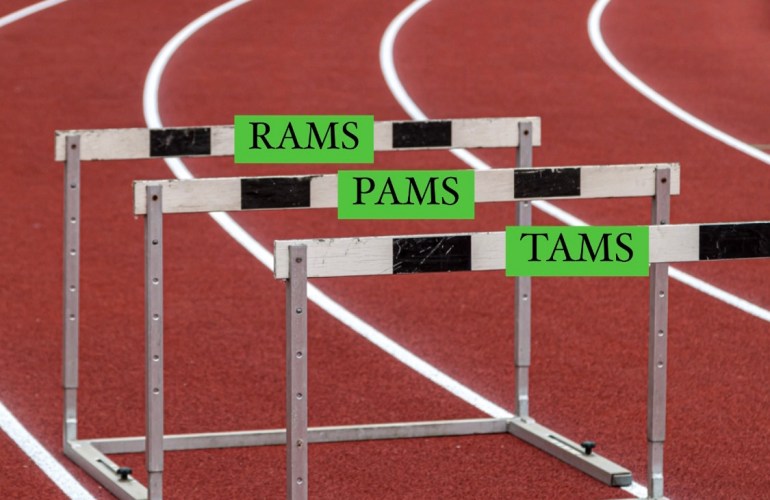
Stage 2 students are required to complete at least 3 TAMS, 1 PAMS and 1 RAMS assignment in order to sit for the MW exam at the end of the academic year. Since I’m aiming to sit in June 2023, that means I have a fair share of homework to finish in the upcoming months.
Having recently completed my first TAMS and PAMS for Stage 2, I thought I’d give a brief breakdown of these three assignment types and my experience (good & bad!) with each so far:
TAMS (Theory Assignment Marking Scheme)
What these are: actual theory questions from past MW exams. The TAMS questions are released after the beginning of the academic year and students can choose which one(s) they submit answers to on three deadlines. For Stage 1, questions come from Papers 1-4 only (since Paper 5 questions will not be on the S1A). For Stage 2, the TAMS questions come from all 5 papers.
How many I’ve done: 2 during Stage 1 and 1 so far in Stage 2. Topics have ranged from vineyard labor shortage to bulk shipping to why the fuck aren’t consumers buying more fortified wine (ok, that last one isn’t exactly verbatim . . . but that’s the heart of the question IMO).
Experience/Feedback received: Several weeks after submitting their TAMS, students receive feedback along with one of the following hypothetical grades: Very high pass / High pass / MW pass / Just below threshold / Below threshold. While it’s easy to focus on that hypothetical grade, based on my personal experience and what I’ve seen from other students, I wouldn’t read TOO much into this being a definitive indicator of your likelihood of passing Stage 1. Some students who received high passes didn’t do so well on the S1 exam. Others who didn’t do great on the TAMS assignment ended up kicking total ass on the exam. Bottom line is to pay attention to the feedback and focus on your weak spots.
My Gen X Gals will recognize this! Collecting stickers was probably a lot more fun than collecting MW examples . . .
Honestly, my TAMS feedback hasn’t been anything I don’t already know: sound structure, easy to read and succinct – but need more global examples. So, this is where I’m focusing a lot of my Stage 2 energy – collecting examples. Kinda like I did with stickers back in elementary school. It remains to be seen if trading will occur or if, like stickers, some individuals will refuse to let go of that sparkly, scratch n’ sniff unicorn. 😉
Per TAMS instructions, students are to aim to complete their essays “under exam conditions” and write answers within 60-75 minutes. Between you and me, I have not done this. In fact, every single student that I’ve spoken with has not completed their TAMS under true exam conditions (which IMO would include being unaware of the actual question asked until the clock starts ticking). Some students do hours of research and then try and write their essay under timed conditions. Others ignore the clock entirely and take their time both researching and writing. Perhaps some more experienced Stage 2 students are banging these essays out under true exam conditions, but I have yet to meet these individuals.
I haven’t completed my TAMS under exam conditions because right now I want to know if my “best efforts” would be passing answers on an MW exam. After researching and reviewing a topic, can I put together a coherent essay – including practical knowledge and examples – to achieve a Pass? I want to receive feedback on TAMS that I’ve taken my time with and feel at least somewhat confident about. And I fully acknowledge that I could not produce an essay of this caliber under true exam conditions . . . yet.
PAMS (Practical Assignment Marking Scheme)
What these are: essentially dry note exercises to help with preparation for the Practical (Tasting) part of the exam. A few weeks prior to the deadline, students are told what the wines are as well as the specific questions to address (i.e. identify the origin, discuss winemaking techniques, comment on style & commercial positioning, etc.)
How many I’ve done: 3 during Stage 1 and 1 so far in Stage 2.
Experience/Feedback received: While students receive feedback on their PAMS submissions, unlike TAMS, we don’t get an assigned grade. So, it’s usually unclear whether our answers would have been “passing” on an actual exam. After we receive our feedback, there is an online “recap session” with a couple of MWs who go over the questions and dissect a student’s answer (anonymously thankfully!) – and give suggestions as to what would make it a better answer. During one of these sessions last year, a student asked why we didn’t receive an assigned grade on our PAMS. One of the MWs hosting replied that it’s probably because many (read: most) submissions would not be passing answers on an MW exam. So, to avoid completely gutting us, they only give feedback. Yikes.
This is where the thick skin comes in (see this video with Amber where I mention this is a necessity for being an MW student!) Last year upon receiving each round of PAMS feedback, I felt discouraged. I am someone who tends to overly focus on negative comments. So at the time, that was all that jumped out at me. But having a clearer head now, when I go back and review my S1 feedback, the majority of comments were constructive and things I needed to learn! Using evidence from the glass to make my arguments. Being more succinct in my answers. Using style to help justify origin.
PAMS are tough until you get comfortable writing dry notes. It’s confusing because you know what the wines are, yet you’re being asked “What’s the variety and origin?” Dry notes also require moving away from the SAT that many of us learned in WSET and all that medium-minus and medium-plus terminology. Getting into the mindset of “how would I justify this was Syrah on an exam? What evidence would I use?” is challenging and it took several months of practice for this to click for me last year. It requires consistent practice – and learning from feedback.
RAMS (Research Paper Assignment Marking Scheme)
What these are: a brief (1200 word) research paper proposal. RAMS are for Stage 2 students only.
How many I’ve done: ZERO to date
Experience/Feedback received: well, none because I haven’t submitted any! But I’ll give you my thoughts anyways:
During Stage 1, I tuned out a lot of what was said about the research paper. Not because I was sticking my head in the sand about it, but because I was all about focusing on the next step in front of me (the S1 Assessment) – not the one that was several miles ahead of me. Students need to pass both sections of the MW exam before they write their research paper. But obviously this does not mean that’s when you first start thinking about it! For me, the timing needed to be a balance . . . and thinking about the research paper when I was stressing over the S1A was too early.
My plan is to complete my first RAMS after the S2 seminar in February. I’m still all over the place as far as potential research paper topics. I’d love to do something on my beloved Washington state. But am also very interested in wine education/certifications (how much do these help with future careers/advancement?) Or the role of social media/influencers in the wine industry (is it as impactful as we think?)
I’ll keep you posted! And I’d love to hear your thoughts on what you think would make an interesting research paper!
A few weeks ago, I received the news from the IMW that I passed my S1A and was progressing to Stage 2! But to be completely honest, I had to read the email twice because I was expecting the delivery to be more in MY language with a lot of emojis and exclamation points about what fantastic news this was!!! The Brits are (obviously) a bit more subdued than I am.
While we students don’t get a ton of information as to how well we did (or did not do) on the S1A, thankfully we do each receive some feedback on our exam performance. What I did fairly well: essay structure, tasting ability and logical arguments. What I need to work on: sweet wines (identification and production methods), vintages and global examples. This was helpful feedback and wasn’t overly surprising – I’m well aware of my weak spots and also know that I can write a decent, logical essay (thank you law school!)
One key bit of advice I have for new MW students is to acknowledge your strengths and weaknesses. We each have our own individual strengths, so embrace yours and use them to your advantage wherever you can. Case in point: my attention to detail seems to serve me well on exams since one of the Examiners’ most frequent comments about students is that they “don’t read the question!” And while you may not want to EMBRACE your weaknesses, at least be aware of what they are. Don’t bullshit yourself and pretend they don’t exist. Because they DO exist . . . and they’ll probably show up on your exam.
This “Season 2 news” also made me think about the future of this blog. What started out as a goal to document my “MW Marathon” – honestly and transparently – unfortunately fell by the wayside fairly quickly this year. And by the time I felt up to writing again, I needed to turn my focus towards preparing for the S1A instead of journalling my experience with the program.
But I do want to share my thoughts with future MW students and, selfishly, I’d love to have a log of my journey so when I’m a much older vintage I can look back, read these entries and think “what an adventure that was!” So – I’m going to continue, but with a couple of adjustments. First, I’m a perfectionist (shocker) and am trying to let some of those tendencies go. Especially when they aren’t necessary – like in a blog post. Future posts might not have all their t’s dotted and i’s crossed, but they will all be authentically ME. And second – I have somehow felt the need to write lengthy posts covering LOTS of details. But let’s be honest: I don’t have time to do that on a regular basis and you all probably don’t have the inclination to read long and rambling musings. MW students are encouraged to keep our exam essays under 1,000 words – and there’s no reason why my posts can’t be too. 😉
And if you’re more of a watcher than a reader, please check out Elevage Wine Coaching’s YouTube channel where we’ve posted some of my IG Lives on the MW program!
So . . . now what?! Well, my plan for the next couple of weeks is to actually help OTHER students over their hurdles (lots of Diploma students with exams coming up). But I’m easing myself back into MW studies, my study group has started up again and reconnecting with my fellow students & friends has re-energized me. 🙂 And knowing me, I’ll need to get a plan in place next month (November) so that I have some direction these next few months before the S2 seminar in February. Not exactly sure what that’ll look like – but I’ll share it with you when I figure it out!
Last week, I officially registered to sit the MW Stage 1 exam on July 25th. Per MW guidelines, students must take this exam at the end of each year that they are registered in S1 unless they have “special consideration” approved. For a brief moment – I considered this.
I am nowhere near where I’d planned to be in my exam preparation process. Losing my Dad in January sent me off my carefully constructed path. Since then, I feel like I’ve been stuck on an obstacle course – and unfortunately it hasn’t been the fun, colorful type of course where everyone is laughing and covered with paint.
There have been a couple of times these past few months when I’ve felt like my “normal self” – motivated, focused and in study-mode. During those times, I’d buckle down for a few days and start to get into a groove. But then I would encounter the obstacle course yet again, and realize that my brain wasn’t ready for intensely focused study. And with my exam on the horizon, panic was setting in.
Thankfully, since attending my WSET Diploma graduation in London last month, I have felt a slow and steady rhythm building – and there are several people responsible for this. 🙂 I spent some unforgettable evenings (and bottles of wine!) with my Diploma study group – most of whom I’d met only virtually. Throughout much of 2020 and a chunk of 2021, our group met weekly on Zoom to review an area of the wine world – and to share our struggles and support one another. Although we were spread out all over the world, the D3 exam and the global pandemic brought us together. Through births, deaths, new jobs, moves and divorces – our group was there for each other. To finally see them in person and hug and laugh and raise glasses together was something I will treasure forever.
Members of my WSET Diploma Family!
Some fellow Diploma graduates . . . and hopefully future MWs!
While in London I also clicked with several new friends. These individuals know a lot about wine, but they’re also able to just enjoy and not overanalyze every glass – something all too rare in wine geeks (myself included!) A few are considering the MW program and I will do everything I can to help them succeed!
And I finally met one of my fabulous mentors – Jim Gore. His positive impact on students is something I aspire to have 1/100th of. After briefly mentioning to him my struggles with the MW program so far, he’s already reached out and connected me with a small group of other MW hopefuls. Thank you Jim!
On graduation day, I introduced myself to several fellow graduates and was met with responses of “oh, you’re Outwines!” This brought a HUGE smile to my face! 🙂 Having worked so hard on social media to create edutaining content for a community of wine geeks, celebrating with them in person gave me such a sense of comradery. We all managed to accomplish this huge goal – and during some incredibly fucking difficult years!
When I walked up, Paul Symington said to me “Sounds like you have a lot of friends!” And you know what . . . I think I do!! 🙂
There were times during my Diploma studies when I questioned why the hell I was doing the program and whether all the time and energy I was expending would be worth it. My graduation celebration proved to me that indeed it was. But not simply for the piece of paper, the friends I met on my Diploma journey are just as important to me as the certification itself. So, to each and every one of you who I crossed paths with: from the bottom of my heart, Thank You for inspiring me, putting some wind back in my wine study sails – and helping me emerge from the obstacle course.
Most students will go through obstacle courses over their MW journey. Some might be fun or adventurous: starting a new job, moving to a different city, having a baby, getting married. And others will be more of a struggle: dealing with unemployment, suffering an illness, losing a family member or loved one. So, after briefly pondering whether I should apply for “special consideration” for the S1A – I decided to go forward and sit the exam. I have wind in my sails and I am confident that over the next 8 weeks I can get myself in a decent spot for success. Plus – I have that pile of outlines I diligently researched whilst preparing for the entrance exam!
However, I’ve also reached a point of acceptance that I may not pass the S1A and move onto stage 2 this year. Admittedly, this would be a bit deflating. But I’m trying to change my mindset about this possible outcome and view it as an opportunity instead. Repeating S1 would give me another year to prepare for the HUGE leap to S2 and having (almost!) completed one year of the MW program, I have a better idea of how to more efficiently spend my study time. There are a number of repeat students in my S1 class – and whenever I’ve spent time with them, it’s clear to me how far ahead they are in their studies. I also know several applicants for the new S1 class, and I would love to be surrounded by these awesome individuals. And finally, repeating stage 1 would give me another chance to better document the first year of the program. What I’d intended to be a detailed and transparent blog series to help future MW students, turned into an incredibly personal and emotional outpouring of the feels.
So for now, I’ll leave you with this poignant pic I saw on Liz and Mollie’s Instagram account. Success and strength come not only from climbing mountains, but also from getting ourselves out of trenches – and out of obstacle courses.




 Outwines